
The Fabric Glossary
Wedding Dress Fabrics, Explained: Tulle, Silk Satin, Lace & Corsetry
By Oko Tilyeukhan · OT Haute Couture · August 19, 2026
Fabric is the single biggest decision in a gown's character — it decides how the dress moves, photographs, and feels through a twelve-hour day. Here is the vocabulary we use at the atelier, in plain English, with the honest strengths of each material.
Italian honeycomb tulle
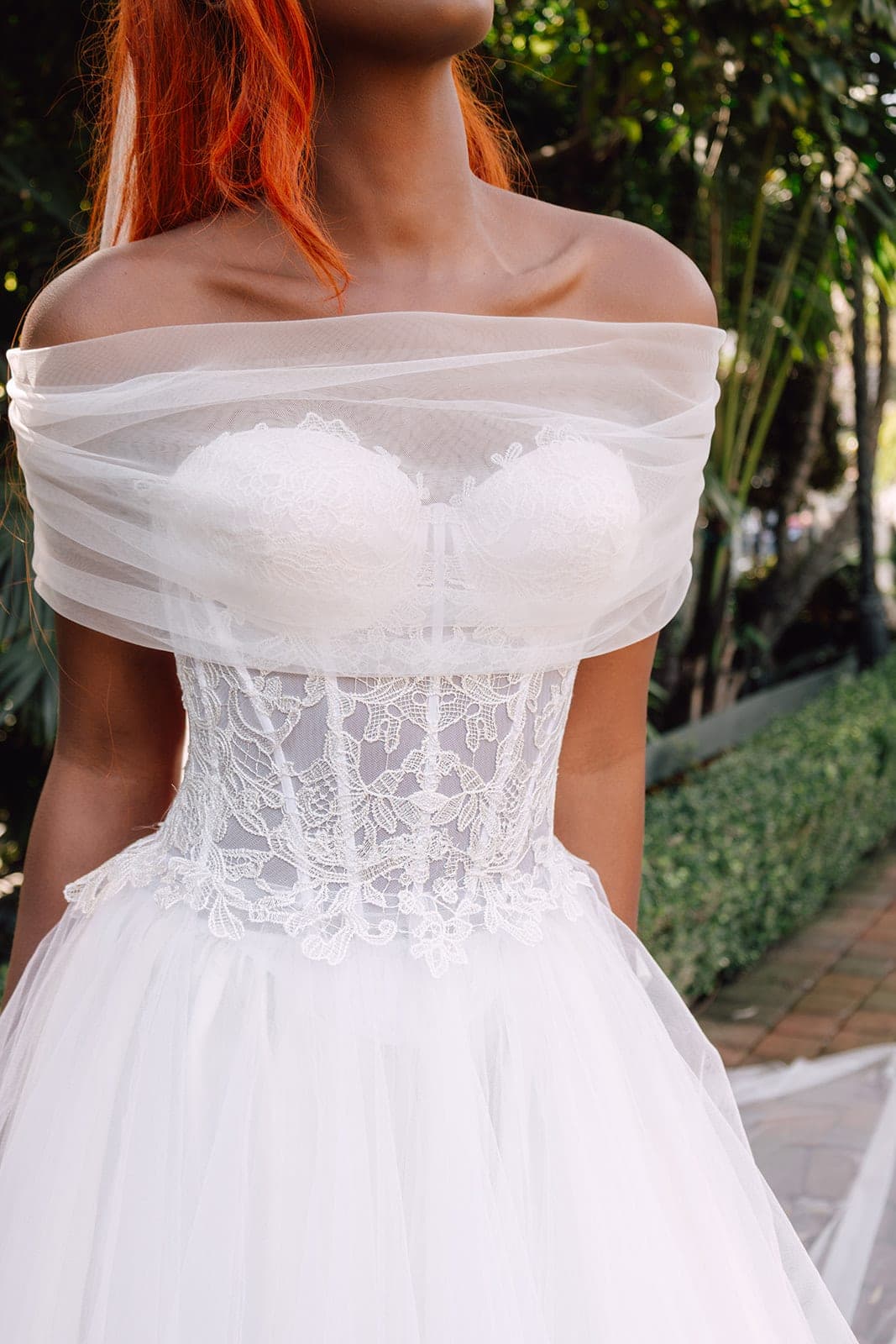
A fine, airy net with a subtle hexagonal texture, sourced from Italian mills. Layered — our two-piece Seraphine carries four layers — it creates volume that moves like air: soft, weightless, romantic. Honeycomb tulle photographs with dimension that flat tulle can't match, and it's the fabric to choose when you want a ballgown that floats rather than stands.
Silk satin & duchess satin
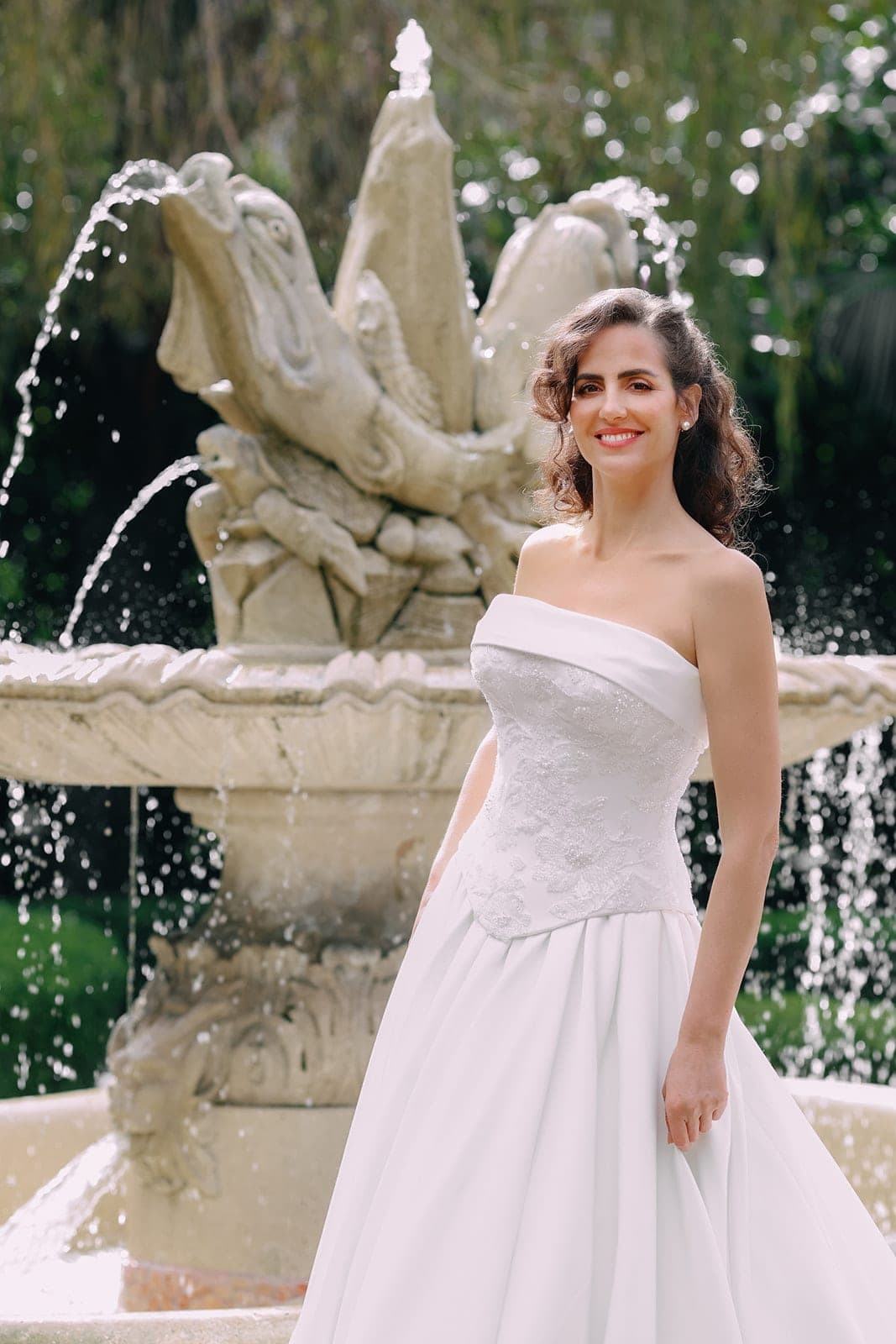
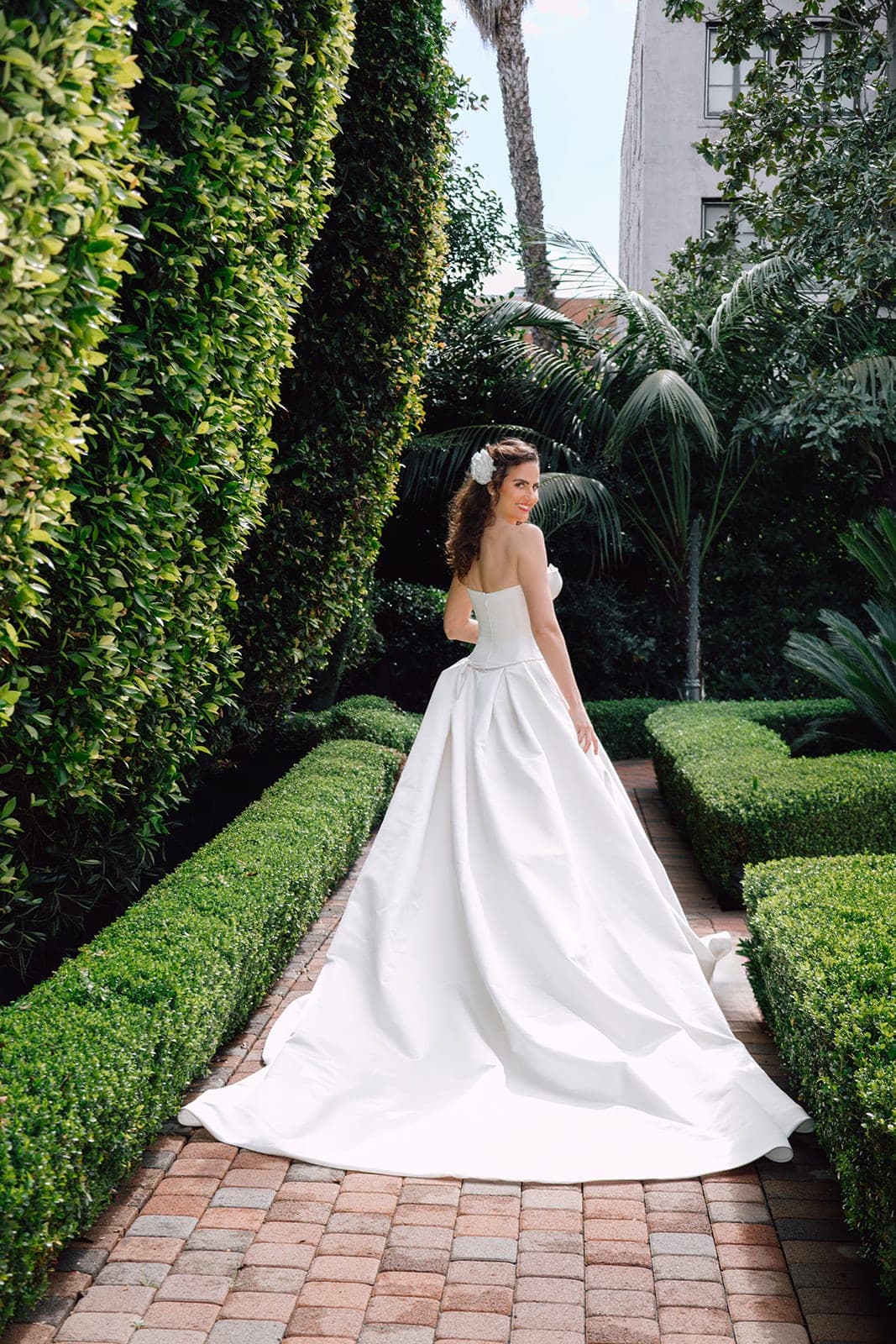
Satin is a weave, not a fiber — and silk satin is its most luxurious expression: a deep, liquid lustre that sculpts clean architectural lines. Duchess satin is the heavier, more structured cousin, holding sharp seams and dramatic silhouettes. Our Camille is cut in silk satin precisely because the fabric itself is the statement: strapless, unadorned, letting the cut speak. Choose satin when you want structure, gravity and quiet drama.
Lace & hand-beaded embellishment
Lace brings pattern and romance — from sheer corsetry that reads delicate against skin to dense appliqué built up in layers. Hand-beading takes it further: crystals and beads set individually, stitch by stitch, as on the Aurelia's floral corset. Embellishment density is a design decision with real cost and timeline weight, because it is genuinely made by hand.
Corsetry — the structure underneath
The invisible engineering that makes couture fit the way it does: boned, shaped bodices built to hold, sculpt and support without a single visible strap doing the work. A well-built corset bodice is why a strapless gown stays effortlessly in place through a night of dancing — and it's the part of a gown where atelier construction most obviously outclasses off-the-rack.
Ready to talk about your own gown? Book a private consultation at the Los Angeles atelier, explore the bridal collection, or see the full portfolio.